
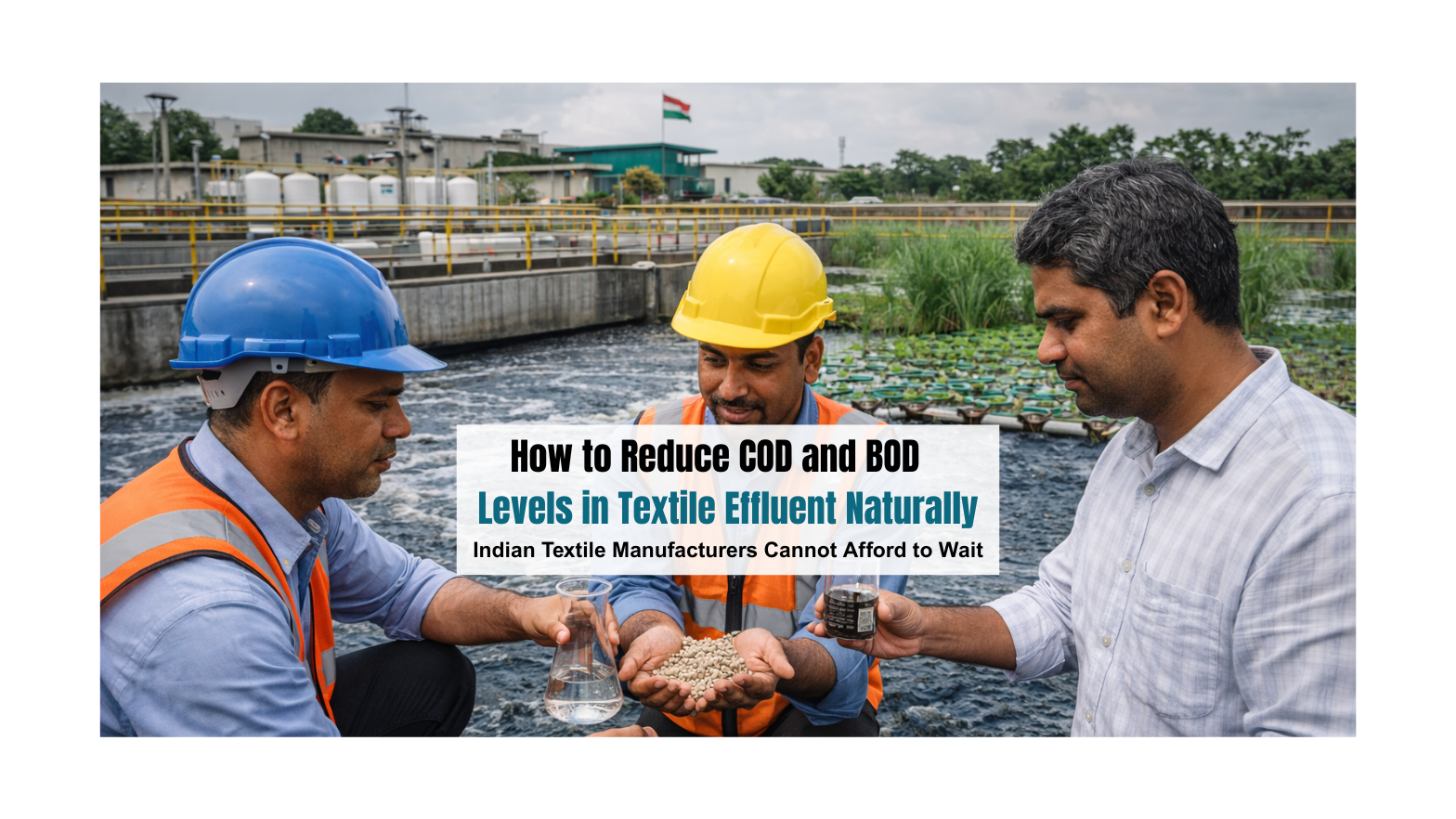

How to Reduce COD and BOD Levels in Textile Effluent Naturally
For textile manufacturers across Tirupur, Surat, Ahmedabad, Panipat, and Ludhiana, the pressure has never been greater. The Central Pollution Control Board (CPCB) and National Green Tribunal (NGT) have tightened environmental norms to unprecedented levels, with BOD limits for inland surface water discharge now fixed at 30 mg/L and COD at 250 mg/L. Non-compliance is no longer met with warnings, it results in immediate closure notices, hefty penalties, and permanent damage to brand reputation.
Beyond regulatory consequences lies a deeper responsibility. The Ganga, Yamuna, and countless other rivers that have sustained Indian civilization for millennia are choking under industrial pollution. As textile manufacturers, you are the custodians of both economic growth and environmental legacy. The question is no longer whether to comply, but how to do so sustainably and cost-effectively.
This is where natural bioremediation for industrial wastewater treatment and compliance in india emerges as the game-changer Indian textile industries have been waiting for.
What Are BOD and COD in Textile Effluent?
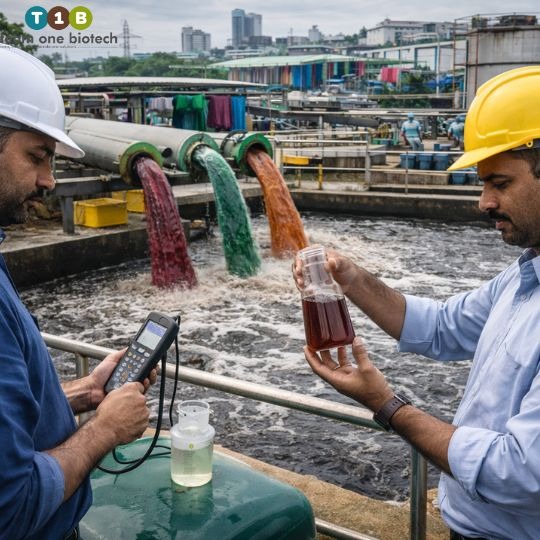
Before addressing solutions, we must understand the problem at a molecular level.
Biological Oxygen Demand (BOD) measures the amount of dissolved oxygen required by aerobic microorganisms to break down organic matter in water. High BOD indicates substantial organic pollution that depletes oxygen levels in water bodies, suffocating aquatic life.
Chemical Oxygen Demand (COD) represents the total quantity of oxygen required to oxidize all organic compounds in water, both biodegradable and non-biodegradable. COD is always higher than BOD and includes synthetic chemicals that biological processes cannot easily break down.
In textile processing, particularly during sizing, desizing, scouring, bleaching, mercerizing, and dyeing, wastewater becomes loaded with:
- Starch and sizing agents from yarn preparation
- Waxes, pectins, and oils from natural fibers
- Complex azo dyes and reactive dyes containing aromatic rings
- Surfactants and detergents from washing processes
- Heavy metals like chromium, copper, and zinc from certain dye fixatives
- Alkalis and acids from pH adjustment stages
These compounds create COD levels that frequently exceed 3,000-5,000 mg/L in raw textile effluent, far beyond CPCB permissible limits. Traditional Effluent Treatment Plants (ETPs) using chemical coagulation and oxidation struggle to consistently achieve compliance, especially with the recalcitrant synthetic dyes that characterize modern textile production.
The Regulatory Landscape: CPCB Wastewater Norms 2026 and Beyond
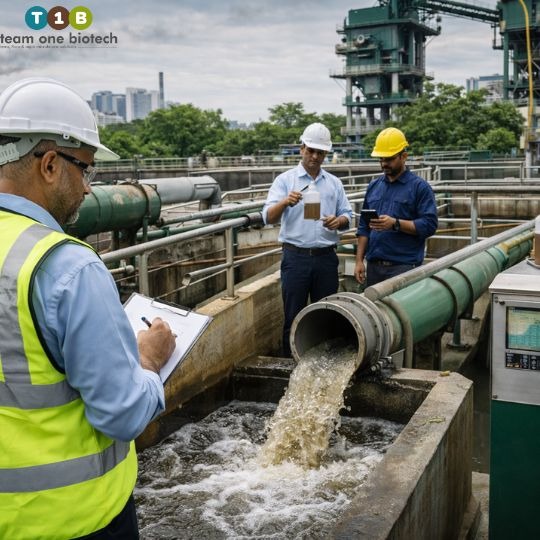
The regulatory environment in India has evolved dramatically. The CPCB, under direction from the NGT, has implemented stringent standards that reflect international best practices:
For Inland Surface Water Discharge:
- BOD: 30 mg/L (previously 100 mg/L in many states)
- COD: 250 mg/L
- Total Suspended Solids (TSS): 100 mg/L
- pH: 5.5-9.0
- Color: Must be removable to meet visual acceptance criteria
For Land Disposal:
- Even stricter parameters apply, with BOD limits at 100 mg/L
Zero Liquid Discharge (ZLD) Mandates: Many textile clusters, particularly in water-stressed regions, now face ZLD compliance requirements, meaning every drop of wastewater must be treated and recycled.
State Pollution Control Boards (SPCBs) conduct surprise inspections with real-time monitoring equipment. Non-compliance results in:
- Immediate production shutdowns
- Penalties ranging from Rs. 5 lakhs to Rs. 25 lakhs
- Prosecution under the Water (Prevention and Control of Pollution) Act, 1974
- Blacklisting from export markets demanding environmental certifications
The harsh reality is that chemical-heavy ETPs are failing to meet these standards consistently. They generate massive sludge volumes, require continuous chemical procurement, and struggle with the color removal essential for visual compliance.
Bioremediation for Industrial Wastewater Treatment
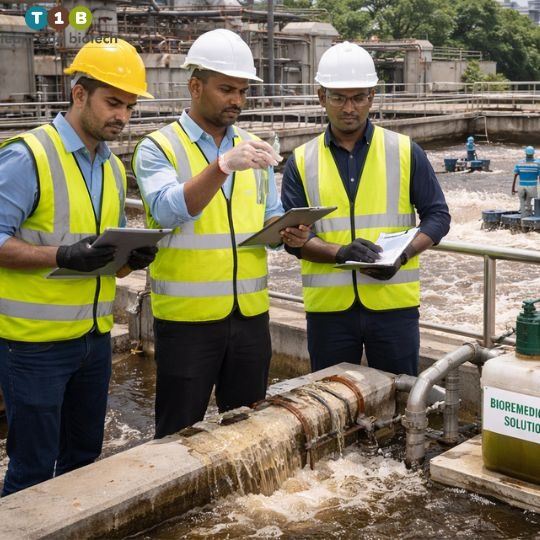
Bioremediation represents a paradigm shift from chemical warfare against pollutants to biological intelligence. Instead of attempting to chemically oxidize every molecule, we harness nature’s own pollution-fighting mechanisms through specialized microorganisms and enzymes.
Bioaugmentation: Engineering Microbial Consortia for Textile Effluent
Bioaugmentation involves introducing highly specialized bacterial and fungal strains specifically selected for their ability to degrade textile pollutants. At Team One Biotech, we have developed microbial consortia that include:
Bacteria:
- Pseudomonas species for aromatic compound breakdown
- Bacillus species for complex organic matter degradation
- Acinetobacter for surfactant biodegradation
- Anaerobic bacteria for initial dye decolorization
Fungi:
- White-rot fungi producing powerful lignin-degrading enzymes
- Aspergillus and Penicillium species for comprehensive organic matter utilization
These microorganisms work in synergy within your existing ETP infrastructure. Unlike chemical treatments that indiscriminately attack all molecules, bioaugmentation is selective, microbes metabolize pollutants as food sources, converting them into harmless CO2, water, and biomass.
The mechanism is elegant: Azo dyes, which constitute 60-70% of textile dyes, contain nitrogen-nitrogen double bonds (N=N) that are resistant to conventional treatment. Specialized bacterial azoreductase enzymes cleave these bonds under anaerobic conditions, followed by aerobic bacteria that completely mineralize the resulting aromatic amines.
This two-stage process achieves COD reduction of 60-80% and BOD reduction of 85-95%, bringing effluent parameters well within CPCB limits.
Enzymatic Treatment: Precision Catalysis for Synthetic Dye Breakdown
While microbial consortia provide comprehensive treatment, enzymatic bioremediation offers targeted precision. Enzymes are biological catalysts that accelerate specific chemical reactions without being consumed.
Key enzymes for textile effluent treatment include:
Laccase: Oxidizes phenolic compounds and aromatic amines from dye degradation Peroxidases: Break down hydrogen peroxide-resistant dyes Azoreductase: Specifically cleaves azo bonds in synthetic dyes Cellulase and Amylase: Degrade sizing agents and finishing compounds
Enzymatic treatment operates under mild conditions (neutral pH, ambient temperature) and produces minimal secondary pollution. When combined with microbial bioaugmentation, enzymes can reduce treatment time by 40-50%, crucial for industries operating at high production volumes.
Economic Benefits: The Business Case for Natural Wastewater Treatment

Shifting to bioremediation is not merely an environmental compliance strategy, it represents significant operational savings:
Reduced Chemical Costs: Eliminate or drastically reduce consumption of alum, ferric chloride, lime, and expensive oxidizers like hydrogen peroxide. Annual savings typically range from Rs. 15-30 lakhs for medium-sized operations.
Lower Sludge Generation: Chemical coagulation produces 3-5 kg of sludge per cubic meter of wastewater. Biological treatment generates 60-70% less sludge, reducing disposal costs and landfill requirements.
Decreased Energy Consumption: Natural processes require less mechanical aeration. Algal oxygen production can reduce aeration energy by 20-35%.
Compliance Assurance: Consistent parameter achievement eliminates penalty risks and production shutdowns. The cost of a single closure often exceeds the investment in biological treatment systems.
Water Recycling Potential: Biologically treated water is suitable for secondary uses like cooling, gardening, and certain process applications, supporting ZLD compliance and reducing freshwater procurement.
Enhanced Brand Value: Environmental certifications (ISO 14001, GOTS, ZDHC) increasingly demand sustainable wastewater management, opening premium export markets.
Bioremediation Success in Indian Textile Clusters
Across India’s textile heartlands, forward-thinking manufacturers are already experiencing the bioremediation advantage:
Tirupur Textile Cluster: Multiple dyeing units have integrated bioaugmentation into Common Effluent Treatment Plants (CETPs), achieving consistent BOD levels below 20 mg/L and enabling water reuse for up to 40% of non-process applications.
Surat Manufacturing Units: Individual ETPs enhanced with enzymatic treatment systems have reduced color levels by 85-90%, meeting the stringent visual discharge standards that chemical treatment struggled to achieve.
Panipat Processors: Textile processors dealing with heavy sizing loads have deployed microbial consortia specifically tailored for starch and PVA degradation, reducing COD by 70% in primary treatment stages alone.
These are not laboratory experiments, they are operational realities demonstrating that natural wastewater treatment for textile effluent is both technically viable and economically superior.
India’s Transition to Green Chemistry in Textile Processing
India stands at a crossroads. We can continue with chemical-intensive treatment that produces hazardous secondary waste and barely meets compliance standards, or we can embrace biological intelligence that works with nature rather than against it.
The transition to bioremediation represents more than regulatory compliance, it is a commitment to sustainable manufacturing, to preserving the waterways that define Indian heritage, and to building textile industries that future generations will be proud of.
At Team One Biotech, we have dedicated over a decade to developing microbial solutions specifically engineered for Indian industrial conditions. Our bioremediation products are not generic imports, they are formulated from strains isolated and optimized for the exact pollutants, temperatures, and pH ranges found in Indian textile effluent.
Ready to Transform Your Wastewater Treatment System?
The question is simple: Can you afford to continue with outdated chemical treatment when natural solutions offer superior results at lower costs?
Your compliance solution is not in a chemical drum, it is in the intelligence of nature, optimized by science, and delivered by Team One Biotech.
Looking to improve your ETP/STP efficiency with the right bioculture?
Talk to our experts at Team One Biotech for customised microbial solutions.
Contact: +91 8855050575
Email: sales@teamonebiotech.com
Visit: www.teamonebiotech.com
Discover More on YouTube – Watch our latest insights & innovations!-
Connect with Us on LinkedIn – Stay updated with expert content & trends!